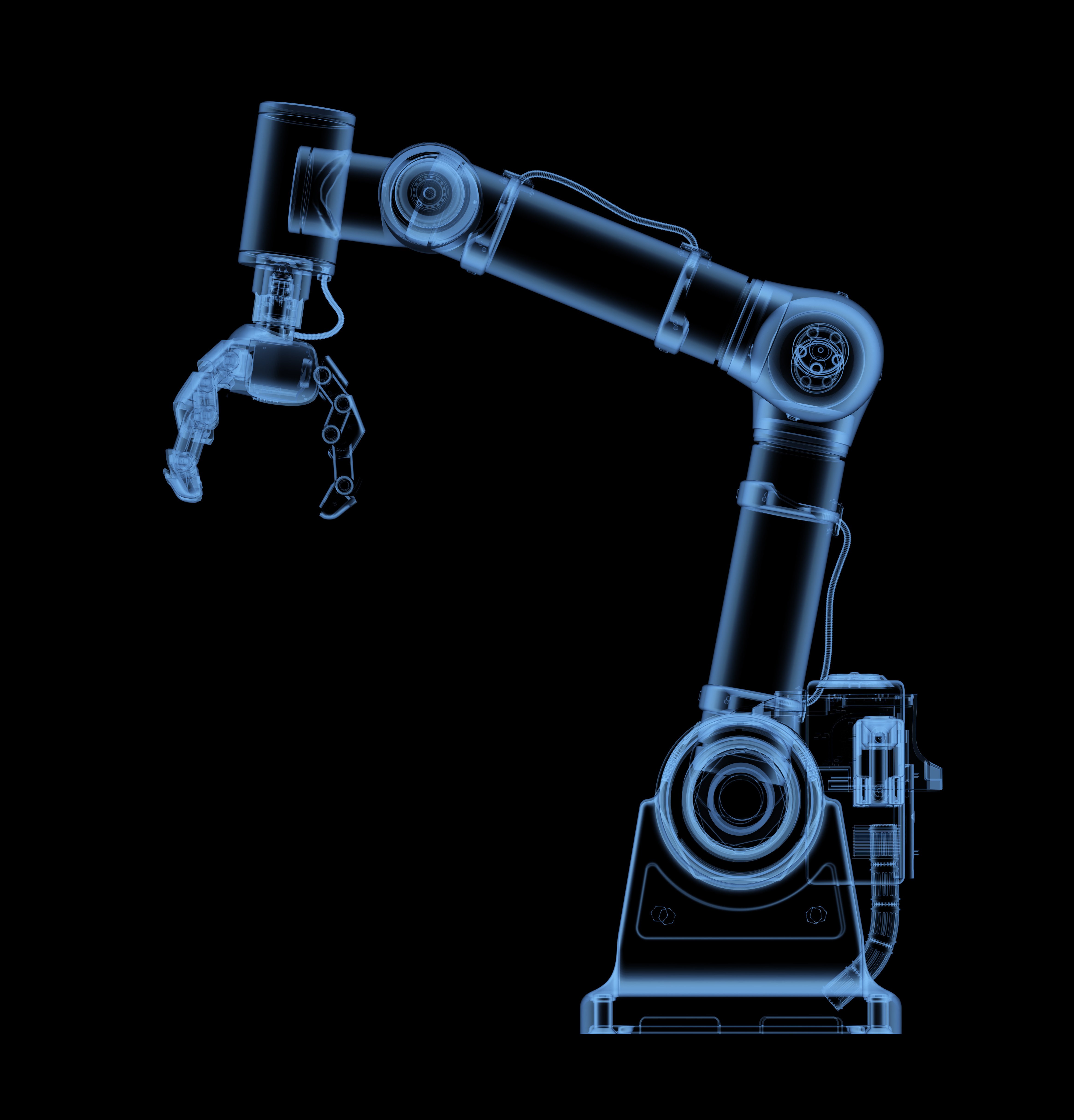

Two ways to predict the world. Choosing is the strategy.
Machines predict the physical world by learning it from data (a world model) or computing it from equations (a physics engine). Today, brain work is augmented by AI. Tomorrow, body work will be. This briefing explains where each approach belongs and what to ask before you commit.
The largest seed round on record for a European startup underscores the acceleration of funding for foundational AI.
Already ahead of 2025's full-year total of US$15 billion and past the previous 2021 peak, with half the year still to run.
NVIDIA, the chip company whose hardware trains most large AI models, reports adoption at scale.
As outlined in the statistics above, investment capital is flowing to the first movers and core technology providers in this space. The underlying models are being adopted at scale, not merely trialled, and competitors and suppliers are placing their bets now. The cost of understanding this field is far lower than the cost of being surprised by it.
The costliest error in physical AI is mistaking a convincing demonstration for a working product. The gap between "works in simulation" and "works on our floor" is the difference between a budgeted automation project and a write-off. Asking the right question before the money is committed is a leadership habit, not a technical one.
The advantage does not go to whoever buys the largest model. It goes to whoever matches the right approach to the actual problem and plans realistically around what it costs to run. That is strategy, and strategy is the chief executive's job.
You do not need the mathematics. You need enough fluency to challenge a vendor claim, scope a pilot honestly, and tell a genuine capability apart from a confident label. Five questions carry most of the value.
Running a model to make a prediction is undemanding. Fine-tuning the best models needs server-class compute. Budget for adapting accessible pre-trained models rather than training frontier ones from scratch, which is rarely the right call for most businesses.
The label is being stretched, and several products marketed as world models are something else on close inspection. A true world model is action-conditioned and predicts the next state of an environment you can interact with. Holding to that simple test separates real capability from confident branding.
World models and physics engines attack the sim-to-real gap from opposite directions, and neither fully closes it today. A practical programme uses both. Be explicit about which tool is doing which job, and evaluate each against the task it actually carries.
Forward calls invite disagreement. We make these on the record, with our reasoning written down, so the next volume of this briefing can hold us to them.
Buyers start applying the strict test before they sign: is it action-conditioned, and can you interact with it? Confident labelling stops passing procurement, and vendors reposition products that were never world models to begin with.
Progress in differentiable and learned physics over the next eighteen months shapes which physical-AI applications become commercially viable. The organisations that evaluate against unseen, contact-heavy conditions set realistic expectations and avoid expensive disappointments.
Physical AI today is where generative AI was a few years ago: clearly capable, still inconsistent. Much of the progress in language models came from the engineering built around them. A similar trajectory here points towards an inflexion point comparable to the 2023 ChatGPT launch. It would make robots and autonomous systems viable in settings out of reach today.
Learned or computed. Where each one belongs.
A ten-minute guide for chief executives: the sliding-scale test for how much this applies to you, why it reaches your desk and not only the CTO's, and the one question to ask a vendor.
What every leader should know about world models and physics engines, and why the difference between learned and computed prediction is now a strategic decision.
The two fields are growing into each other while a second divide widens: who can actually run the best models. Aicadium's position on where the field goes next.